Subscribe for Updates
--->

Making a Difference: Hidden Valley Inn

This month's Making a Difference award winner is Hidden Valley Inn, a luxury eco-resort set high in the Mountain Pine Ridge in the Cayo District of Belize. This secluded forest escape has miles of well-groomed trails as well as its own restaurant, massage rooms, and yoga studio. We spoke with Raul Rodriguez to find out more about this beautiful eco-chic hotel.

Hidden Valley Inn, Belize

Q. Is Hidden Valley Inn a good place for travelers who want to see exotic plants and wildlife?

RR: Yes! Hidden Valley Inn is dedicated to nature conservation. We are located on a 7,200 acre private reserve comprised of two ecosystems: Caribbean pine forest and tropical broadleaf jungle. In our forests, you can find numerous cascades, pools, and waterfalls networked by over 90 miles of trails and roads.

Hidden Valley Inn is involved with multiple wildlife projects in the region. The first orange-breasted falcons born in captivity, five females and one male, were released by the Peregrine Fund on Hidden Valley Inn's private reserve in 2007. Other animals that live in the forest include jaguars, ocelots, and peccaries--and look out for otters swimming in the quiet streams on the property.

Hidden Valley Inn, Belize Q. What can your guests do to learn about local Belizean culture and customs?

RR: Travelers can visit nearby areas that reflect the multicultural communities of Belize. The villages of Cristo Rey and San Antonio are home to predominantly Mayan descendants, while the inhabitants of Georgeville and Progresso are of mixed Creole and Mestizo descent and the Barton Creek farming area is occupied by an Amish community. Further down the Western Highway is Spanish Lookout, where the Mennonites reside and farm.

We have a "Meet the People Tour" that takes guests into these areas to see, feel, touch, smell, and taste the Belizean way of life. Our guides are knowledgeable in Belizean culture and customs. Guests participate in educational tours conducted by local guides and attend cultural fairs and events. During these tours, you can support the local communities by purchasing local food, fresh produce, and arts and crafts.

Q. Why sustainability is so important for your hotel and what noteworthy sustainable initiatives are you carrying out?

RR: Sustainability is the mainstay of our tourism products, hotel, and tours. We believe that protecting the natural environment and its diverse ecosystems will be a great benefit to the tourism industry of Belize for generations to come.

We have environmentally-friendly procedures in place to minimize waste. We use eco-friendly chemicals and products from reputable suppliers as well as fresh local produce instead of imported packaged goods. We monitor our electricity, fuel, and water usage and have an eco-friendly garbage disposal system.

Hidden Valley Inn, Belize We rely on locals for our business and employ the majority of our employees from the surrounding villages. By economically empowering these residents, they in turn take ownership of the natural resources and are motivated to protect the wildlife and biodiversity of the area.

We offer educational tours and excursions to students from two local schools in Cristo Rey and San Antonio Village. We have also donated a photocopier to the Cristo Rey school and are in the process of assisting with the creation of a computer lab for the San Antonio school.

Q. Of all of the hotels in the Mountain Pine Ridge area, what makes Hidden Valley Inn special?

RR: Hidden Valley Inn is situated on a large property unrivaled by any hotel in the area, offering ultimate privacy and seclusion. Those in the mood for some romance can even reserve certain waterfalls and cascade pools for the day. With only 12 rooms on this vast property, privacy and a focus on wellness can be guaranteed. You can take advantage of our vast trail network, three yoga platforms, and our holistic spa, complemented by qualified local guides and employees that will bend over backwards for their guests.

Making a Difference: Hotel Guancascos

This month's Making a Difference award winner is Hotel Guancascos, a charming inn situated in a lovely town in rural Honduras. Hotel Guancascos is perfect for those looking for a relaxing getaway in a bucolic setting, surrounded by beautiful landscapes and farming communities. We spoke with owner Fronica Miederma to find out more about her sustainable hotel.

Hotel Guancascos, Honduras

Q. In what region of Honduras is Hotel Guancascos?

Miederma: Hotel Guancascos is located in western Honduras, in a small historic colonial town of approximately 10,000 inhabitants called Gracias. The hotel sits at the foot of the Celaque mountain range, which is home to the country's highest mountain. The region is known for its beautiful peaks, nature, and history. The first colonial routes passed through here, leaving an outstanding architectural legacy.

Gracias is part of a consortium of six small towns called Colusca, where some of the Honduras's oldest churches -- built during the colonial era -- still stand. The area is rural and vibrant with the culture of traditional agriculture and coffee production.

Hotel Guancascos, Honduras Q.What can your guests learn about local culture and traditions during their stay at Hotel Guancascos?

M: We recommend taking the city tour, so visitors can see and enjoy the architectural heritage and daily life of the local people. You'll visit many city sites including three colonial churches, an interpretive museum with a botanical garden, and the Castillo San Cristóbal. Along the way, you'll also stop to visit local craft sellers and traditional food vendors.

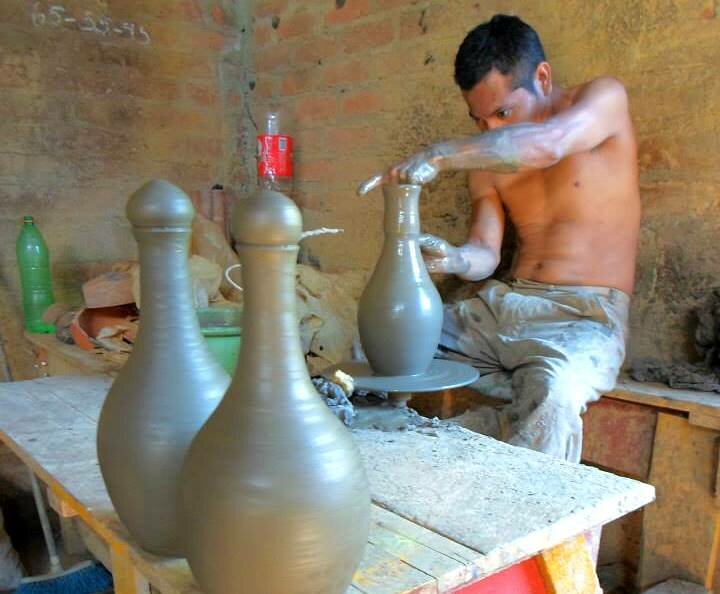
You can also visit the picturesque indigenous village of La Campa and interact with the people of this community. The women there are famous for their Lenca pottery, which is 100 percent handmade in the traditional way and exhibits an interesting legacy of beliefs and mythology.

Q.What kind of ecotourism activities are available nearby?

M: Gracias is surrounded by a 102-square mile (26,393-hectare) mountain range that includes Celaque Mountain, the highest mountain in Honduras at 9,347 feet (2,849 meters) above sea level. Celaque National Park is home to the largest cloud forest of Central America, which is very rich in biodiversity and has 16 miles (26 km) of well-marked trails to discover and explore the area's lush nature. In addition to hiking the trails of Celaque, visitors can go camping in the mountains, biking and bird-watching in the forest, swimming in the hot springs, and on excursions to the pottery cooperatives and organic coffee farms.

On Sundays, they can visit the churches of the Colosuca circuit and even participate in at least one traditional mass.

Q.Why is sustainability so important for your hotel? Tell me about your most outstanding sustainablility initiatives.

Hotel Guancascos, Honduras M: Our hotel policy is focused on doing the right thing. As we are in a historic city surrounded by nature, we're very aware of the significance of our natural treasures. We want to take an active role in the conservation of the area's natural and historic legacies and to contribute to the region's economic development in a way that is inclusive. In our daily activities, we try to respect local architecture and culture, form alliances for the welfare of the community, and promote a better quality of life for the company's personnel -- helping them make improvements to their homes and supporting them with bilingual education for their children, for example.

In partnership with Fundacion Miramundo, we raise funds for scholarships and construction projects in the local community. We are also in the process of creating a Tourism Training Center where students can earn a bachelor's degree in tourism, as well as a high school degree.

Q.Of all the accommodations near Celaque National Park, what makes Hotel Guancascos special?

M: Our hotel is known for its comfort and simplicity, a lush garden and restaurant with the best view of the city, and a genuine, family-friendly atmosphere. The hotel also aims to be a liaison between responsible travelers and the local community. We have a lot of experience in the region, and our passion is sharing this knowledge with our guests.

Making a Difference: Lima Tours

SustainableTrip.org's Making a Difference award winner this month is Lima Tours, a sustainable tour operator in Peru that uses its employees' insider knowledge to craft authentic experiences for travelers. We spoke with Lima Tours' Humberto Medrano to find out a little bit more about this innovative industry leader.

Lima Tours, Peru

Q. What are the top three attractions that travelers must experience when visiting your country, and why?

A. First is Machu Picchu for its rich historical background and amazing mountain views. But bear in mind that one can only fully understand the site after having experienced Choquequirao, another Inca city in the south of Peru. Machu Picchu was once as remote as Choquequirao is now, but ironically the latter was built afterwards. Building these cities in the midst of a sacred geography is something the Incas pondered for the location of both sites.

Second is Lake Titicaca, a true pacarina, or birthplace of ancient civilizations. Inca myths narrate how the founding couple emerged from the waters and settled in Cusco. The Tiahuanaco peoples who populated the area influenced Inca imperial architecture. The Kallawaya, traditional healers that still exist today, live around the lake and spoke Puquina, known as the "secret language of the Inca." You can look at the photographic masterpieces of Martín Chambi de Coaza and Juan Manuel Castro Prieto to grasp the dreamlike sensation of Titicaca's waters.

Third is the Amazon, more precisely the Pacaya-Samiria Natural Reserve. It is a colorful, buoyant hotspot the traveler can enjoy while cruising on an elegant boat. Meeting those who "haven't forgotten the old ways," as world renowned scholar Wade Davis has pointed out, is immediately appealing while in this remote and untouched part of the earth.

Lima Tours, Peru

Q. Why is sustainability so important for your business and what noteworthy sustainable initiatives are you carrying out?

A. Today, being sustainable is important to every business, but it is crucial to businesses within the travel industry. Tour operators make a living from taking travelers to places where deep, moving, enriching experiences can be enjoyed. These places are almost all very fragile, such as intact ecosystems, communities with cultures very different from the West, and thousand-year-old buildings that house delicate pieces of ancient art. Ensuring a sustainable culture is the first step towards establishing a sustainable business. Sustainability is part of our core business model and we work hard to ensure our suppliers consider it as such, too. In the end, a virtuous cycle is established to everyone's benefit.

Some of the activities in our sustainability program include recycling all plastic bottles that our passengers use, training our guides in environment responsibility, ensuring that passengers properly dispose of their garbage, improving the working environment in Lima Tours offices, encouraging and requiring sustainability from our suppliers, and honoring the Lima Tours' paperless promise.

Q. Of all of the tour operators in Peru, what makes Lima Tours special?

A. Lima Tours is special because we have 56 years of experience in spearheading the Peruvian travel industry.

The company has been awarded the "Great Place to Work" prize a number of times. What this means to our clients is that they will have a proactive, thankful, enthusiastic travel specialist eager to share their knowledge of and passion for Peru. Any self-respecting traveler knows the value of insight that only locals can unveil. At Lima Tours, our passion for Peru is what drives us to share those insights with clients and to keep crafting magnificent experiences in Peru, one guest a time.

Making a Difference: Manu Learning Centre

SustainableTrip.org's Making a Difference award winner this month is Manu Learning Centre, a conservation research center and ecolodge in Peru's Manú Biosphere Reserve. We spoke with Francesca Lewis, Head of Marketing and Sales, to find out a little bit more about this valuable cultural, scientific, and economic resource in the Amazonian rainforest.

Manu Learning Centre, Peru

Q. What kind of wildlife can visitors expect to see at/near MLC?

Lewis: They will see a huge abundance of wildlife at MLC and in its surroundings. The list is too long to write here, but over 650 species were recorded in the vicinity of MLC last year alone!

Examples of wildlife visitors can see include the jaguar, puma, and ocelot as well as various species of primates such as the howler monkey and the endangered blue head macaw, to name just a few.

Manu Learning Centre, Peru Q. Is MLC primarily a research center or lodge?

Lewis: MLC started as a research center but now serves as both. We've seen that being both a research center and a tourist lodge really complement one another. Travelers staying at MLC are keen to learn more about our projects and sustainability initiatives, and how we are helping to conserve Manu. The researchers benefit from tourism, as this provides much-needed funding for the foundation to continue its work.

Q. What is the history of Manu Learning Centre?

Lewis: The Manu Learning Centre (MLC) was built in 2004 on an abandoned hacienda, the first to be developed in the region. The initial concept was to demonstrate that it was possible to use novel land use techniques to rehabilitate large areas of degraded land and to empower and educate local communities throughout this process.

MLC in 2012 continues to be a great place from which the CREES Foundation bases all of its research, projects, and initiatives.

More recently, MLC has opened its doors to tourism and it now serves as a fantastic lodge where tourists can stay as part of their trip to Manu.

The lodge itself was built using local Matsiguenka building design and is comprised of large airy buildings which complement their surroundings and minimizes impact on the local environment.

Manu Learning Centre, Peru Q. What kind of research is carried out at MLC?

Lewis: Conservation research based on the value of regenerating tropical forests and their potential importance for future biodiversity. We look at species richness, abundance, and diversity in birds, mammals, butterflies, amphibians and reptiles from forests with different disturbance histories.

We also look at how current hunting and logging pressures can affect the distribution and movement patterns of mammals and game birds.

Predator-prey interactions are also being researched within the regenerating forest and are considered in terms of temporal and spatial patterns, with a further focus on how different predators share the habitat.

Q. What can visitors do to learn about local and/or indigenous culture?

Lewis: Visitors can learn huge amounts about the local culture within Manu. Staying at the lodge itself provides a good insight into local way of life. The buildings are based on local Matsiguenga design, and much of the food cooked at the lodge is sourced locally and is grown in the gardens at the MLC.

Visitors will also be able to visit the Shintuya and Queros tribes of Manu and see firsthand their indigenous culture and way of life.

A key part of staying at MLC is learning how the projects we run help to conserve these local communities and their traditions.

Q. Why is sustainability so important for your hotel and what noteworthy sustainable initiatives are you carrying out?

Lewis: Manu Learning Centre is based on the single-minded goal of sustainability.

The lodge has been specifically designed to facilitate and support conservation and sustainability research. The Centre boasts a solar powered internet connection, an environmentally sound septic system, and gravity-fed water pumps in order to minimize our impact on the environment and reduce our carbon footprint.

Previous research conducted at the station has incorporated aspects of biology, geography, zoology, anthropology, politics, and art & design through projects focusing on reforestation, mammal behavior patterns, human impact studies, environmental management, monitoring of the endangered blue headed macaw, soil sustainability & agriculture, forest dynamics, carbon trading with local communities, and the legitimacy of local power structures, to name a few.

In addition to these, the MLC has hosted conferences organized by WWF-Peru, the Organization of Tropical Studies (OTS), and the Anniversary Conference of the Manu National Park.

Manu Learning Centre, Peru Q. Of all of the hotels in the Manú Biosphere Reserve area, what makes MLC special?

Lewis: As the MLC has evolved over the years, it has remained true to its roots as a center for learning. It is a place where different groups of people can come together, whether they are tourists, volunteers, researchers, or local community members, and interact and take part in educational exchanges relating to the sustainable initiatives operated from the lodge.

The MLC is also special for the warmth and hospitality of the staff. Visitors always comment on this after their stay as being something really unique.

MLC is also the only lodge in Manu to actively offset its carbon footprint through reforestation projects with local communities, making us the only carbon neutral lodge in Manu.

Making a Difference: Nacientes Palmichal

This month's SustainableTrip.org Making a Difference award winner is Nacientes Palmichal, a community-owned ecolodge in a rural area of the San José province in Costa Rica. We spoke with Hernán Ramírez Alfaro, Executive Director of Nacientes Palmichal, to find out a little bit more about this unique ecotourism experience.

Forest, Nacientes Palmichal, Costa Rica

Q. Is Nacientes Palmichal a good place for travelers who want to see exotic wildlife?

Alfaro: Nacientes Palmichal owns a 104-acre wildlife reserve where visitors can hike the trails and see many species of mammals, birds, and butterflies. We are located in the upper part of a watershed with access to a river and hundreds of acres of primary forest that house springs and many species of plants and animals. This location offers a very beautiful panorama, perfect for hikes and enjoying nature.

Q. What can your guests do to learn about the local culture and traditions of your communities?

Alfaro: Our community is in an area that has several beautiful coffee farms. We are also near the Huetar Quitirrisí Indigenous Reserve.

Visitors can come and learn about the Authentic Coffee Route. At Cerco Don Manuel, you can tour a coffee farm with Don Manuel and his wife Mery, who will show you their farm surrounded by coffee, banana, and plantain trees and a large hearth for baking bread and making tortillas. During the tour of the coffee farm, Manuel shares his experiences in managing and maintaining his coffee fields and shows you the tools that are used on the farm. Visitors can strap on a basket and try their hand at coffee picking.

The outstanding farmers of the Asoproaaa Association have been awarded with the "Cup of Excellence" for the high-quality standards of their fine specialty coffees. On this tour, visitors see the roasting, grinding, and packaging of coffee beans and learn how to taste and distinguish between different qualities of coffee.

The Río Jorco Mill is a business with more than 100 years of experience producing coffee in the area. It carries out ecological coffee milling to remove the pulp and husk from the beans before putting them out to sun-dry on the patios. The mill recreates experiences in a historic house where visitors can learn about the history of this family and see the machinery, documents, and other artifacts retrieved over the years.

During your visit to the Huetar Quitirrisí Indigenous Reserve, you can learn about the history, customs, traditions, and handicrafts of this indigenous community. There is a demonstration of weaving techniques and the natural materials they use, their utensils, and foods. You can also see the endemic, endangered plants that they have planted for many years and learn about the uses of these plants' leaves and stems in indigenous traditions.

Nacientes Palmichal, Costa Rica

Q. What is Nacientes Palmichal's history? How did it begin?

Alfaro: Nacientes Palmichal was formed twenty years ago when several families in the town of Palmichal de Acosta created a community organization dedicated to protecting the water resources that supply the 50,000 inhabitants of the Acosta, Mora, and Puriscal communities. In the fall of 1991, Nacientes Palmichal joined with private businesses, institutions, and municipalities to coordinate the first "Ecology Week" with the slogan "We love nature." The event's goal was to instill values, knowledge, and a protective attitude towards natural resources and water in particular, using environmental education to positively influence behavior and habits. Another goal was to improve socioeconomic conditions and living standards for the community.

After the success of that event, new began planning for the sustainable development of our watershed and the creation of an environmental center that would fulfill several objectives: Favoring the development of education and training for appropriate coexistence with the environment and natural resource use, especially water; strengthening our rural community tourism model to achieve environmental, cultural, economic, and social sustainability, with the broad participation of families and organizations; increasing the participation of private and public institutions, the beneficiary population, and the municipalities of Acosta, Mora, and Puriscal to strengthen the planning and execution of projects for the watershed; and improving quality of life for the people by maintaining equilibrium between the supply of soil, water, and forest resources.

Q. Why is sustainability so important for your business? Tell us about the new projects you are implementing in this area.

Alfaro: Sustainability improves the development of all the resources in the community (forest, land, water), and that is the reason for Nacientes Palmichal's existence. We are also interested in the financial sustainability needed for executing our shared vision of coexistence, high quality of life, harmony with nature and natural resources, and hospitality to visitors.

New projects we are implementing include: forming a Chamber of Rural Community Tourism; developing educational programs that will help ensure the protection and sustainable management of natural resources; creating a water park to ensure the protection, management, and sustainable use of the water that is generated in the watershed; developing safe, sustainable, and high quality agricultural production using technology that minimizes negative environmental effects; and celebrating the IV Water and Coffee Fair.

Nacientes Palmichal, Costa Rica

Q. How do you involve your guests in your sustainability initiatives?

Alfaro: The guests can get involved by properly using the inn's resources, supporting the area's educational centers, participating in tree planting, visiting local family businesses, and exploring the culture of our farmers and indigenous people. They can also learn more about our initiatives for producing biogas, compost and worm composting, the recycling area, and how we use wastes to make handicrafts.

Q. Of all the rural lodging sites in Costa Rica, what makes Nacientes Palmichal so special?

Alfaro: The authenticity of the people who work here. We take great care to serve our visitors with respect and warmth. Visitors will also find a community that is completely immersed in the culture of coffee growing, where they can share a delicious cup of high-quality coffee year-round on the coffee farm with the campesinos who work the land every day.


Congratulations to Nacientes Palmichal for the winning the Making a Difference award!

Making a Difference: Arenas del Mar Beachfront & Rainforest Resort

This month's SustainableTrip.org "Making a Difference" award winner is Arenas del Mar Beachfront & Rainforest Resort, an eco-luxury hotel located where the beach meets the rainforest in Costa Rica's Manuel Antonio National Park. We spoke with Hans Pfister, president of Cayuga Sustainable Hospitality, the company that runs Arenas del Mar, to find out a little bit more about this beautiful and sustainable hotel.

Arenas del Mar

Q. Is Arenas del Mar a good place for travelers who want to see exotic wildlife?

Pfister: Yes--our clients don't even have to leave the hotel to experience wildlife! At Arenas del Mar, you can see monkeys, sloths, birds, iguanas, frogs, and boa constrictors right on our property. We also have expert guides who will share interesting facts about the surrounding flora and fauna. There are also tours you can take--particularly to Manuel Antonio National Park, Costa Rica's most beautiful park, which is brimming with exotic animals and plant species.

Q. How can visitors learn about the local culture while staying at Arenas del Mar?

Pfister: We offer a free tour called "Tortillas en Petatillo." This is an excursion to the town of Petatillo, where guests can learn about local culture and even make their own tortillas in the traditional manner once used by these communities. You'll also get to sample great coffee or the "agua dulce" (sweet water) that is popular among locals.

Q. Why is sustainability so important for your hotel, and what noteworthy sustainable initiatives are you carrying out?

Pfister: Arenas del Mar is the first of its kind in Costa Rica because from day one, it was built according to the requirements of the prestigious Certification for Sustainable Tourism (CST) program. We do all of the basic activities like recycling, but we also go beyond that. We are involved in a program that eliminates the use of all plastic bottles in our restaurant, Arenas del Marsince it is better to not use these types of bottles at all than to recycle them. We are also committed to working exclusively with the local community and we try to pass on this philosophy on to our clients.

Q. How do you get your guests involved with your sustainability initiatives?

Pfister: We offer a sustainable tour that allows our guests to see everything that we do from behind the scenes. We also provide guests with the option to make their vacation "green" by reducing their carbon footprint.

Q. Of all of the hotels in the Manuel Antonio area, what makes Arenas del Mar special?

Pfister: We are the only luxury hotel in Manuel Antonio where guests have views of both the forest and the beach from one vantage point, as well as direct access to two beaches from which you can walk to the park. It's also earned the highest possible rating from CST, five leaves, and has a 5 star quality rating from the Costa Rica Tourism Board.


Congratulations to Arenas del Mar for winning our Making a Difference award!

Making A Difference: Sumaq Machu Picchu Hotel in Peru

We believe that it's important to recognize businesses that are going above and beyond in their efforts to implement sustainable initiatives in their businesses and their community. To do so, each month, the SustainableTrip.org editors carefully select one tourism business that is making outstanding efforts to conserve natural resources and improve local livelihoods and give them our Making a Difference award.

This month's Making a Difference award winner is Sumaq Machu Picchu Hotel, a stylish boutique hotel located at the entrance to the enigmatic ruins at Machu Picchu. We spoke with Marketing and Public Relations Manager Lizeth Giurfa Barrientos to find out a little bit more about this beautiful and sustainable hotel.

Sumaq Machu Picchu Hotel

Q: Is Sumaq Machu Picchu Hotel a good place for travelers who want to see exotic wildlife?

A: Sumaq Machu Picchu Hotel is an ideal place to experience the area's plants and animals because it is located in the hills of the Machu Picchu sanctuary, which was declared a UNESCO World Heritage Site in 1983. More than 370 species of wild orchids and more than 400 species of endemic birds have been recorded at Machu Picchu. During Sumaq's ecological and bird-watching tours, guests can experience these unique species. For example, on hikes to Mandor, you can see nests of oropendolas, families of torrent ducks, and groups of hummingbirds. Next to the hotel is the Vilcanota River, where dozens of giant otters live, and from the hotel's reception area you can see a family of rare spectacled bears eating bromeliads by the river's edge, especially in August. Wildlife habitats are respected on our tours. Moreover, we take a firm stand against trafficking in wild species in our sustainability policies.

Q: What can your guests do to learn about local Peruvian culture and ancient Incan customs?

A: We offer a range of exclusive cultural activities that allow guests to interact with local and Peruvian culture:

Peruvian Cooking and Bar Classes: Sumaq's cooking and bartending experts teach guests to prepare typical dishes, such as trout ceviche and the emblematic pisco sour cocktail.

La Pachamanca Sumaq: This is a traditional kind of outdoor cooking inherited from ancient Peruvians. Guests can watch the process from the start, as stones and ingredients such as meat and Andean tubers are placed in a hole in the ground, which is used as a sort of oven. Once the food is cooked, the chefs take it into the hotel's restaurant for our guests to enjoy.

Sumaq Machu Picchu Hotel

Tribute to the Earth Ritual: This is a spiritual and mystical ceremony that pays tribute to Mother Earth for everything she gives us. The custom is widespread in the Andean highlands of Peru. Here guests interact with the elements of Andean nature – the sun, the hills, the stars, and the wind – through prayers and pleas to the Andean version of Mother Earth, called La Pachamama in the Quechua language.

Sumaq Machu Picchu Hotel

Andean Wedding or Arac Masin: This symbolic ceremony of union and love was celebrated by ancient Peruvians in the Andean highlands of southern Peru. It is ideal for couples who want to wed or renew their vows in a traditional Peruvian way.

Sumaq Machu Picchu Hotel

The wedding is conducted by an Andean shaman, who seals the union of the couple through songs and prayers aided by the coca leaf, a typical Inca plant. The ceremony is usually carried out at the Puente Ruinas in the middle of the sanctuary; in the rainy season it is done in the hotel.

Q: Why is sustainability so important for your hotel and what noteworthy sustainable initiatives are you carrying out?

A: Sumaq Machu Picchu Hotel has had an ethical and moral commitment since it began. Our sustainable practices started as a family initiative with our partners, and today these practices are expressed in our organizational philosophy.

Sumaq has been operating for four years in Machu Picchu and in 2010 it was the first hotel to obtain Rainforest Alliance Verification in this area. Thanks to our commitment, we have received national and international recognition for our sustainable practices, and for more than nine months we have been classified as the number one hotel in Machu Picchu on Trip Advisor.

Solid waste management is one of our outstanding sustainable activities. From 2009 to 2010 we reduced the hotel's solid wastes by 36%. This is an outcome of our purchasing policy: we have stopped buying products that use a lot of packaging, and we recycle, reuse paper, and sort organic and inorganic materials. In addition, more than 80% of our staff members are local, hailing from the towns of Machu Picchu Pueblo, Urubamba, Anta, and Cusco. Forty-five percent of the food we purchase comes from local providers in Cusco. We invest in our employees: from January to August 2011, Sumaq collaborators attended more than 12 professional training events. As a result, more than 35% of our personnel have been trained as of August 2011.

From 2009 to 2010, electricity consumption per traveler was reduced from 27.24 kw to 17.24 kw, and in 2010, solid wastes were reduced by 36% over 2009 levels. From 2010 to 2011, we reduced water consumption from 2.52 m3 to 2.08 m3 and fuel consumption in our activities was reduced by 7%. From January 2010 to July 2011, we recycled more 4 million amenity containers.

Q: Of all of the hotels in the Machu Picchu area, what makes Sumaq special?

A: Sumaq Machu Picchu Hotel is the only five-star hotel in the town of Machu Picchu Pueblo. Its architecture complements the natural surroundings with earth tones that resemble the sanctuary's natural landscape, with its cloud forests and azure sky. We have an exclusive menu that emphasizes the flavors of southern Peru. Local techniques and ingredients carefully selected by our chefs have made Sumaq an exquisite gastronomic reference point for clients, guests, and food critics from around the world.

Sumaq is also a special and exclusive hotel due to the diverse activities we have available. We offer outdoor activities such as hikes to Mandor and its waterfall and ascents up the mountains of Machu Picchu, Wayna Picchu, Putukusi, and Inti Punku. And, as I mentioned earlier, we also have unique cultural activities at Sumaq Machu Picchu that celebrate Peruvian and Andean culture.

Sumaq Machu Picchu Hotel


Congratulations to Sumaq Machu Picchu for winning our Making a Difference award! Visit their full profile on SustainableTrip.org to learn more about this beautiful hotel and its sustainable practices.

Calendar

<< May 2012 >>
Sun Mon Tue Wed Thu Fri Sat
    1 2 3 4 5
6 7 8 9 10 11 12
13 14 15 16 17 18 19
20 21 22 23 24 25 26
27 28 29 30 31    

Subscribe for Updates

Sponsors

Find sustainable hotels, tour operators, and other businesses in Mexico, Central, and South America, and the Caribbean: